
If you know about the pilgrim Camino network in Europe, then skip this bit. If you don’t, then buckle up, because, even if you don’t fancy yourself as a modern pilgrim, it’s still fairly special.
The legend of St James is that his remains were brought to Galicia for burial where they were lost, and only found after a hermit followed a bright star (I know you think you’ve heard this before, but carry on) to the burial spot in what is now Santiago de Compostela. Word got back to King Alfonzo, who ordered the cathedral to be built on the burial site. The relics are still there, and have been verified by various popes, so they’re definitely the genuine article…
So, after the cathedral was constructed, it became a place of pilgrimage, as part of the general ‘suffer on the way to see the relics of St James and you’ll buy yourself an indulgence which will speed your way through purgatory’ process. 2025 is a special year, as indulgences are actually available to modern pilgrims (although you need to be catholic, take confession and jump through a couple of other hoops before you get a certificate).
Queen Isabel made the pilgrimage twice in the 14th century and she later became a saint, which we both saw as a strong incentive for the walk. Well, you’ve got to have dreams, haven’t you?
The Camino network starts from many places in Europe, but most notably Spain, France and Portugal. People do the pilgrimage walks for lots of reasons, and there are, understandably, lots of enthusiastic Christians that look on it as a spiritual adventure. I reflected on this quite a bit over the days we were walking/hobbling/sheltering from the elements, wondering how much the positive and negative parts would be magnified if we’d have been travelling with St Isabel, for example. Btw, let’s abbreviate her to SI now. I’ve a feeling she’ll be featuring quite a bit as we travel toward Santiago. In fact, let’s see what happens by telling the story of the walk…
Day one, and we headed out of Porto. I should have mentioned that there were four of us on this trip. Me, Mrs E, and two unpleasantly large rucksacks, which we will call Beast 1 and Beast 2. We’d packed lightly, taking whatever we thought we could get away with, but even so, the packs seemed to weigh a ton. We’d managed a 15 mile walk with full packs the previous weekend, and all had been well, but we’d not taken more than a few steps before Mrs E and Beast 2 were struggling to get on.
‘I’m not going to get on with you for two weeks’, she said, probably addressing the pack.
‘Let’s just get out of Porto’, I helpfully suggested.
If you’re planning to do this trip, please note that it takes about four hours to get out of Porto. By now, packs had been adjusted and there was just a bit of back pain to put up with. Unfortunately, Beast 2 was still complaining, with a squeaking noise that no adjustment could shift.
‘I really can’t put up with this any more’, Mrs E announced, again, probably addressing the rucksack.
By now we were skirting around Porto airport, and the squeaking was still audible over the sound of the planes taking off and landing. Mrs E was getting even more frustrated with Beast 2.
‘Why doesn’t yours squeak?’ she demanded.
Then I may have told a slight untruth, which even SI might have forgiven.
‘Oh, mine squeaks all the time’, I fibbed.
That seemed to settle things nicely. As long as Beast 2 wasn’t making it personal, and as long as Beast 1 was also being annoying, all was right with the world, and even though the squeaking continued for another three days, it was never mentioned again.
Eight hours and 30km later, we got to our hotel, just outside Vila de Conde. Many pilgrims choose to stay in Auberges, which are hostels along the route, where you pay about €15 a night for the opportunity to sleep in a dormitory along with other pilgrims. We’d decided, in a Christian-like spirit, not to impose our snoring on others, and to stay in rooms with comfortable beds and bathrooms, and decent breakfasts. Not sure this was quite the pilgrim spirit, and I think SI would have preferred a more spartan arrangement, but who knows? We’d prebooked the hotels and it would be a shame to not use the rooms, after all.
A fitful night’s sleep for Mrs E – I’d dropped off nicely as usual but she was kept awake initially by the floorboards creaking (‘Just imagine you’re on a boat, and it’s the sound of the timbers’, I helpfully said, going to sleep myself on the second syllable of timbers). This kept her awake for an hour or so, before a rowdy group assembled at the bar just below our room. This was the final straw, so, wearing a fetching ensemble of nightdress, walking trousers, fleece and sandals, she marched down to reception and asked for another room. Apparently (this was, after all, during my REM phase), she did so between tears, only managing to blurt out
‘I’m very tired and tomorrow I have to walk the caminho!’
over and over again.
Unsurprisingly, the group was moved to another part of the hotel. A few hours later, fully refreshed, I asked her how she’d slept. I received what Paddington fans might remember as a ‘hard stare’.
Day two, and a recovery from that tetchy start, with a walk along the coastline to Esposende. We’d seen some horrendous news from Southern Portugal about storm Martinho, which had caused loads of damage through storm rain, floods and gales in mainland Portugal. It hadn’t spread too far north yet, but it was expected to make an appearance in the next couple of days, so we enjoyed a really good hike across boardwalks and forest tracks, met a few more pilgrims on the way, and started to hear a few ‘Bom Caminho’s’ as we went along. We even managed a few of our own – there were hikers going in the opposite direction, towards the Fatima shrine, between Porto and Lisbon.

Beasts 1&2 were being slightly better behaved, although at least one of them was still squeaking away.
We saw a lot of the sea – we’d hiked in Galicia before so we knew it could be a bit lively – it would have been great for surfing, had it not been for the coastline, which was very very rocky. Frustrating for Mrs E, whose idea of a perfect morning includes a sea or river swim, ideally at around 5°C – we’d even packed towels just in case we wanted to interrupt eight hours of walking with a bracing dip – but it was not to be.
Anyway, 26km later we were in a comparatively crappy hotel, grabbing food at the only veggie restaurant in town, and back for a thankfully undisturbed sleep.
Which brings us to day three. When me and the two chuckle brothers (see previous two wheeled adventures) reminisce about our bike touring trips, we often mention the ‘day from hell’, an 80 mile ride in the Netherlands, where it started pouring as soon as we set off, where we were all soaked to the bone within 30 minutes, and where the rain just kept on giving and giving, only relenting with about one mile left to go. You may be ahead of me here, but day three was our day from hell. Storm Martinho had decided to take a trip North, and although it didn’t bring the destructive winds from a few days before, it definitely tried hard with the rain. We lasted ok for the first hour, with our ‘waterproof’ coats keeping us fairly snug, but apparently there is a limit to how waterproof a coat actually is, and our limits were both about an hour, with at least another six to go. And our feet were soon sitting on top of a layer of puddle, sock, puddle and shoe.
Absolutely everything was soaked. I suggested to Mrs E that if we looked on this as a true pilgrimage then we might want to think of these conditions as a test of our faith. (She didn’t agree). At times it felt a bit like that scene in Forrest Gump, when Lieutenant Dan ties himself to the mast and shouts to God ‘Is this all you’ve got?’ in the storm. But the rain eased off a little after four hours, and we began to count down the distance to Viano do Castelo. But Martinho hadn’t done with us yet, and as we crossed the bridge from Cabadelo, it decided to pick up with renewed enthusiasm.
A word about the bridge. It’s called the Ponte Eiffel, (designed by yer man Gustav), it’s made of steel, it’s 645m long, and the top floor, where the traffic and pedestrians go, is completely open, except for a guard rail on each edge. I don’t know how high it is off the water, but definitely high enough that you don’t want to look down. There was no way that we were going to take a picture in that weather, so here’s one that someone took in drier times :

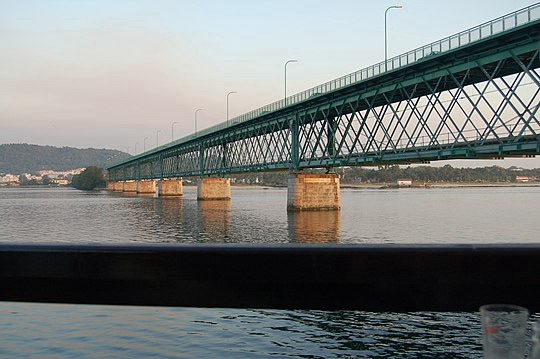
I suppose looking down wasn’t really an option anyway. The rain was so bad that you just had to concentrate on looking ahead. The wind was incredibly strong, and blowing from the sea, threatening to throw us into the traffic at any point. I decided that the best approach was to put my left arm over the guard rail to hold on there when the wind really gusted. Every now and then I’d turn round, and I remember being quite surprised to see that Mrs E was still on the path. Anyway, it took about 10 minutes to cross, one of the scariest things we’d ever done, and at the end, completely drenched and with no feeling left in our hands, we tried to find somewhere to shelter to see where our hotel was. Unable to operate a wet phone with broken thumbs, we guessed, and fortunately headed in the right direction. We made something of an entrance to the very posh hotel, dripping water on their shiny wooden floor and refusing to sit down on their pristine seats. Recovered a bit to sign in, but only managed to do so by holding a pen in my fist and moving it randomly around the registration form.
We managed to get into our room without too much further embarrassment, and made a check of clothing that needed to dry. Because we’d packed very light, almost everything needed to be worn again the next day, so, dressed in dry shorts and T-shirts, we borrowed an umbrella and found the town laundrette. Not quite Nick Kamen, but not far off.
Day 4 brought further storms which would apparently be ‘over in a couple of days’. Most of our clothes were relatively dry and we were quite keen to keep them that way. We’d noticed other pilgrims on day three wearing huge capes that covered them and their rucksacks, and also wearing smug smiles as they eased past our shivering forms. Was it wrong to envy other pilgrims? SI wasn’t around to ask, so we decided not, and so I set off after breakfast, again in shorts and umbrella, to a tiny shop that we’d noticed the night before, that had a handwritten ‘ponchos’ sign in the window.
‘Don’t get yellow’, Mrs E helpfully called out, as I headed off into the monsoon.
As it happened, colour was the least of the issues. My Portuguese is beyond rusty, and the elderly lady at the shop was not only very Portuguese but also very deaf. Eventually we established that:
a) she did sell ponchos
b) that she only had one left (in blue)
c) they were €7
d) that she’d go and look out the back for another one
e) there wasn’t one out the back
f) the one hanging up could be for sale
g) but on closer inspection it had a number of rips and tears
h) so was neither use nor ornament (I’m paraphrasing the Portuguese here, of course)
i) that she could help me no more so here was the change from €10
j) that there wasn’t another poncho seller in the town
k) that our business was was concluded
Then, apparently as an afterthought, she held the torn (yellow) poncho out to me, presumably to dispose of as I saw fit.
And so it was that we set off, with both of us and the two Beasts covered with the flimsiest of plastic covers, Mrs E in a fetching blue, and me in a less fetching yellow number, looking very much like I’d recently been attacked with a Stanley knife. This is the first picture we took. Possibly not our finest, but I’m very keen on the porthole look that my wife has gone for. I think it’ll catch on.
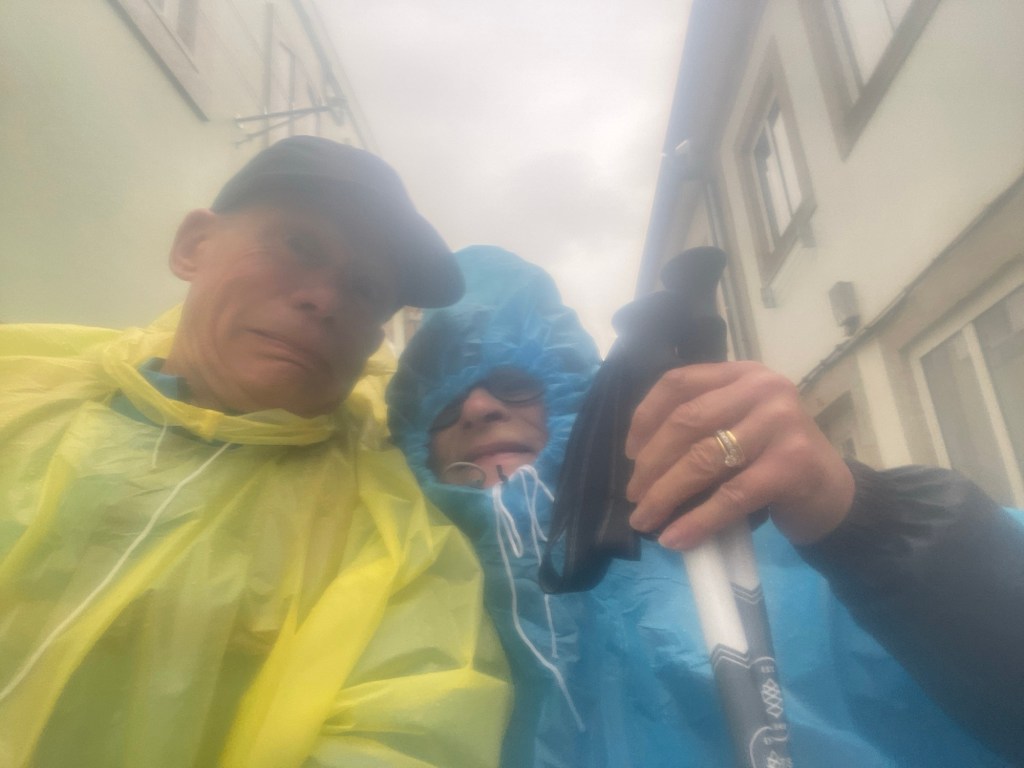
The rain kept up for hours, we were marginally drier than the day before, except where our legs and arms emerged from the cape (and for me, below the numerous slashes).
We hiked through some lovely forest and went up and down what would have been challenging rocky paths, but, because of the weather, were challenging river beds. At one point, we took shelter in a bus stop and both independently thought about checking the bus timetable. We had to cross a river on giant stepping stones, each about a meter apart, with precarious falls on each side, and only mentioned the bus option to each other afterwards, by which time of course, we couldn’t go back.
We’d agreed after day one that we’d try to drink water every hour, just to have a break, and this was a good tactic, or it would have been had it not been for the process of needing to go to the loo every hour as well. This is challenging on a walk at the best of times, but in pouring rain, with full packs, hiking gear, ponchos and hands so cold that fingers and thumbs were inoperable, it proved particularly challenging. Obviously the challenges took different forms. I managed with very little precision using some ungainly thumb work. Mrs E found a balancing point that looked oddly like an outtake from Teenage Mutant Ninja Turtles, quite elegant in her own way, but requiring a partner to lift Beast 2 off her back in order to reassemble her lower clothing.
We’d completed these manoeuvres, thankfully, when we met up with a couple of German women, who we walked with for a couple of hours, and the change of conversation and company meant that the miles went by much faster. Said goodbye to our German friends as we reached Amoroso, as they were staying there, but we still had another 10k to go, as we needed to get to Caminha, on the Portuguese border. This was hard work, as it started raining again, every now and again it would stop, there’d be a little bit of drying out, then it would start again.
‘I’ve really had enough of this’, said Mrs E, as we climbed yet another hill. And then a miracle happened. I might have mentioned in the past that Mrs E has a real aversion to whistling, and there, at the top of the hill, sheltering under a huge umbrella was a whistling man. A tunelessly gormless whistling man at that.
I turned to my long suffering wife who, incidentally, hadn’t been able to see anything out of her porthole since the morning as her glasses had been covered in rain.
‘What if there was something at the top of this hill that really annoyed you even more than the rain? But that you could just walk away from?’
‘Yeah, like that’s going to happen’
And so it was, at the top of a hill in northern Portugal, in pouring rain, a gormless man whistling a tuneless tune under a huge umbrella, miles away from anywhere, found the contents of a blue and a yellow cape, covering ridiculous hunchbacks, openly laughing at him. SI would not approve.
On the way downhill from the whistling twit, Mrs E managed some further good news. Beast 2 had stopped squeaking. Maybe the beast had been tamed.
Eventually we got to Caminha, and checked into a creepy hotel which was full of dark winding corridors with ‘staff only’ doors shutting just as we turned each corner. And, for some reason, a glade plugin on every available power outlet. Rarely wared, as they say in Norfolk.
We were on the Portugal/Spain border and needed to get across the Minho river. The hourly ferry wasn’t running, but we managed to book a water taxi, which was as billed as a ‘speedboat for six’, at 0830 in the morning.
So Day 5 started with a walk to the dock, and a chilly wait with other pilgrims for the speedboat for six.
Actually, it started a bit before then – Mrs E was determined not to have wet feet any more – she’d started to get some really nasty blisters from walking in wet socks and shoes. To her delight, she found that a plastic sanitary bag from the bathroom was just right to cover her sock. But only one sock, so the day started nice and early with her asking the night porter for another bag, a challenge that probably wasn’t helped by her miming that she wanted it, not for its original use, but for her foot. The night porter struggled with the challenge, especially when trying to enlist the help of the breakfast cook, but eventually returned with a couple of carrier bags, so Mrs E set off on day five with a sanitary bag on one foot and a large plastic bag on the other. Meanwhile, the speedboat turned up dead on time, and sped us across the river in under five minutes. This was a relief – if we’d not got the boat we would have had to wait until 1430, or take a 15km diversion via an inland bridge.
So we set off into Spain, where, thanks to Mrs E’s 30 day streak on duolingo, we felt much more relaxed with the language, seamlessly switching from ‘Bon Caminho’ to ‘Buen Camino’. Of course it started raining almost immediately, but it was soft and light and intermittent rain, so we were wearing our ridiculous capes for fun rather than function. It turned into a long day though; the stages so far had pretty well matched the suggested routes in our guidebook, but we wanted to stay in a hotel a bit further into the next stage, so we ended up walking for eight hours, and covering about 30km.
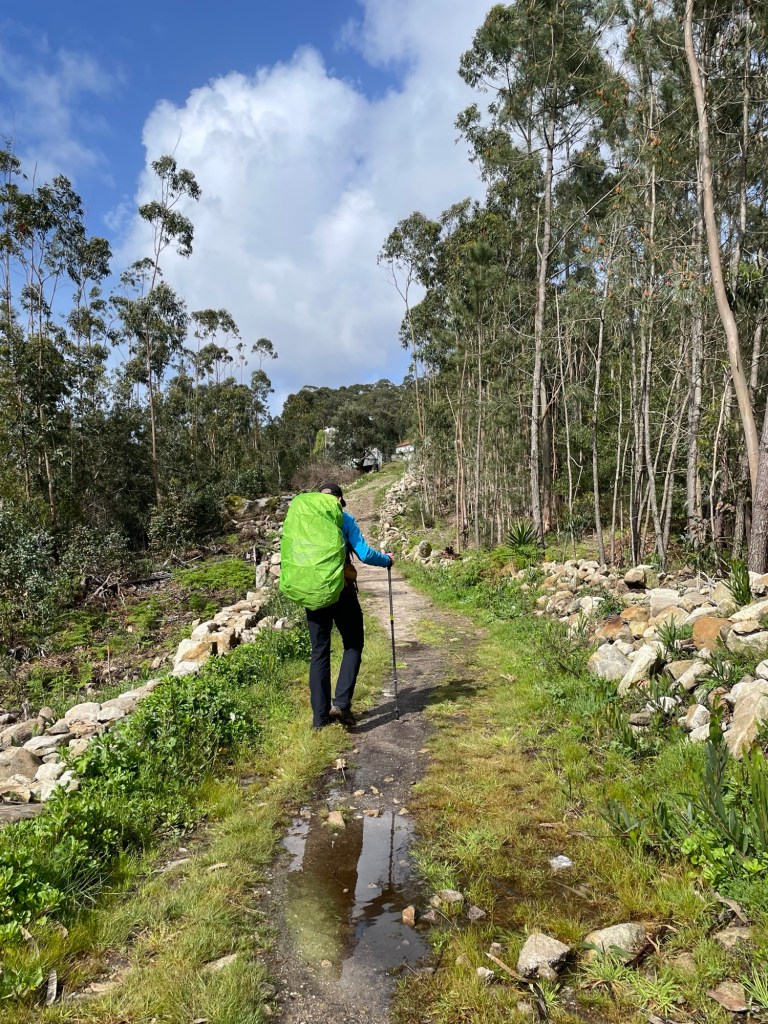
The last couple of hours were quite hard work – Mrs E had blisters from wet socks on the previous couple of days, so we trudged down the hill to what ended up as a fantastic hotel with its own hydrotherapy spa – unbelievable luxury – we looked and felt completely out of place in the posh reception with our rucksacks and muddy trousers, but this mattered a lot less by the time we got to the spa, where Mrs E found a freezing plunge pool and looked as happy as I’d seen her for several days.
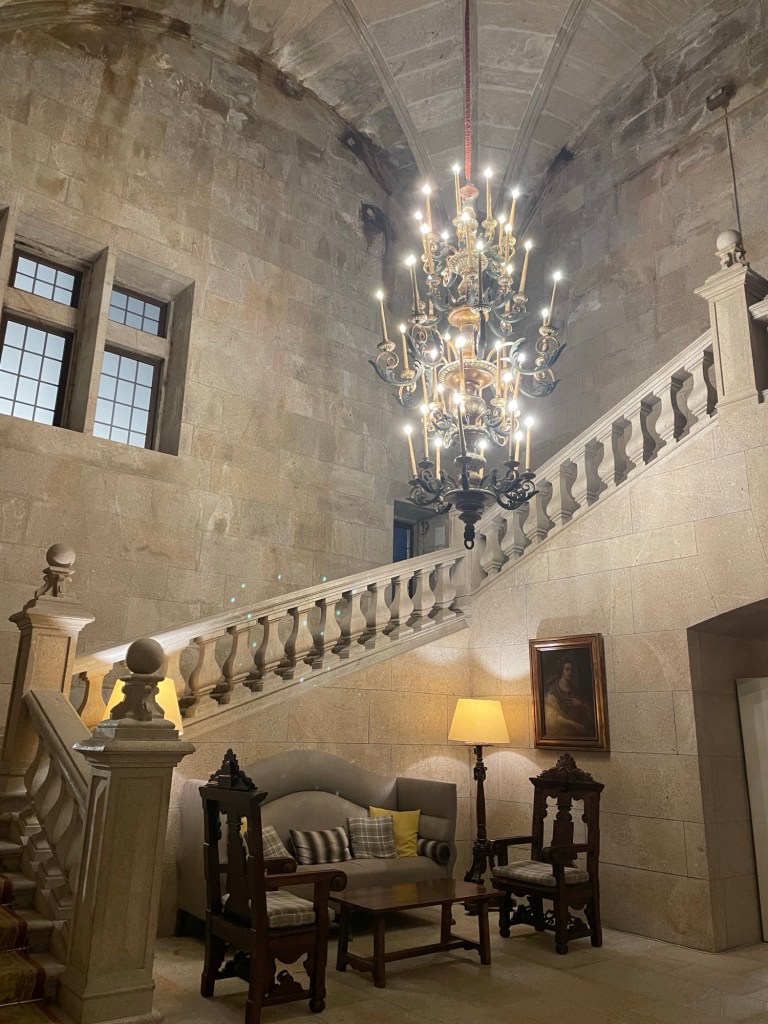
Even better was the news that day six was a rest day of sorts, with only a couple of hours into Baiona, where we’d be staying at the Parador. I may have bored you before about the joys of the Parador hotel – each one a national monument that just happens to be a hotel, and this one was as special as they get – we were literally staying in a restored fort – the outside wall of our room would have been the stone fort, the whole building covered the 18 hectare peninsula, and despite the fact that Francis Drake attacked it enthusiastically in 1585 it remains in amazing condition. And everything (this being a Parador) is just wonderful. We didn’t have time to explore all of the castle and the fort, opting to loaf around, make phone calls and recover properly, but if we had, we would have seen the prince’s tower, dating back to the 10th century, later holding the Hapsburg prince who was in an iron mask, the inspiration for the Dumas novel. And, for that matter, the slightly shorter Billy Bragg song.
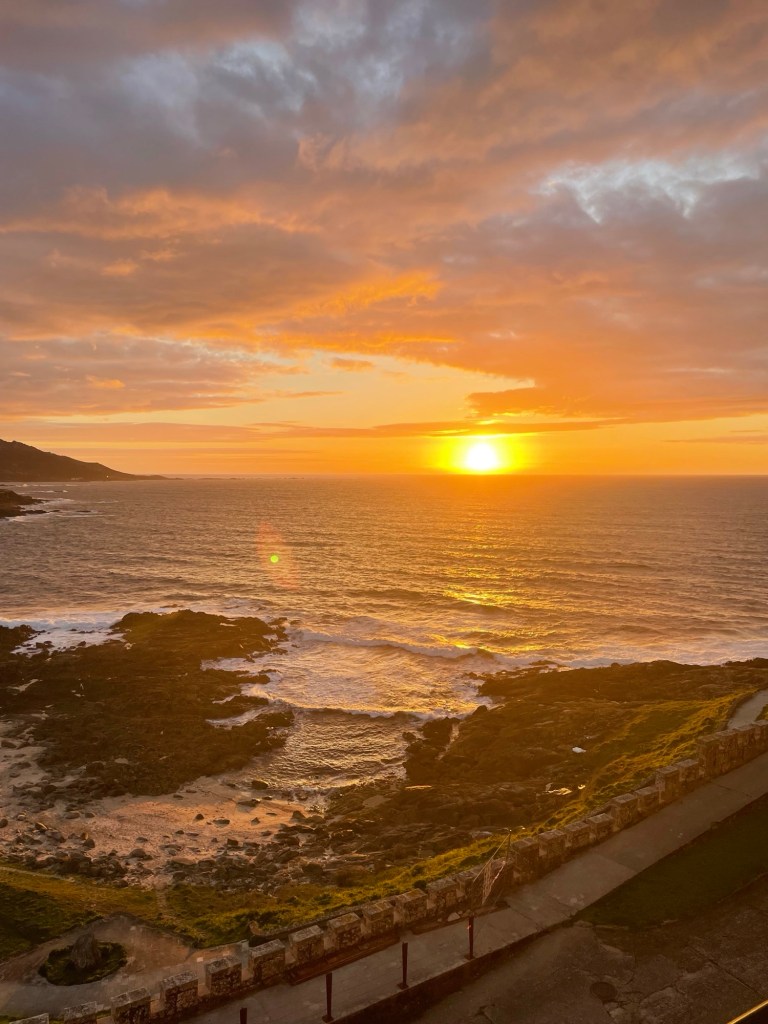

Day seven, and the first proper sunny day – our map suggested that we’d be hiking about 20km, but the caminho route said otherwise, and we ended up doing about 24km. A lot of this was off road, and a huge amount uphill, winding through forest tracks with terrific views of the ocean below, which for the first time showed a couple of spots that you might have been able to paddle in without being flattened by the big waves.

Mrs E found it hard going, and the last few kilometres were really taxing, very hot, very uphill, and by the time we got to our (very lovely) hotel, she was dragging her right foot a bit like Keyser Söze in The Usual Suspects.
That’s where part one of this blog was going to end. You could have read this and been excited for part two – we were halfway through the trip, the easiest walking was to come, and the celebrations in the square at Santiago were just six days away. I could have told you about the pilgrim’s service in the cathedral and maybe even the process of obtaining an indulgence. But there isn’t going to be a part two, because after Mrs E had limped to the hotel room, she made the mistake of removing her right sock. Despite a lot of Vaseline and a year’s supply of compeed, her blisters had got much worse and she was in lots of pain. Even worse, we could see the start of infection heading up from the foot.
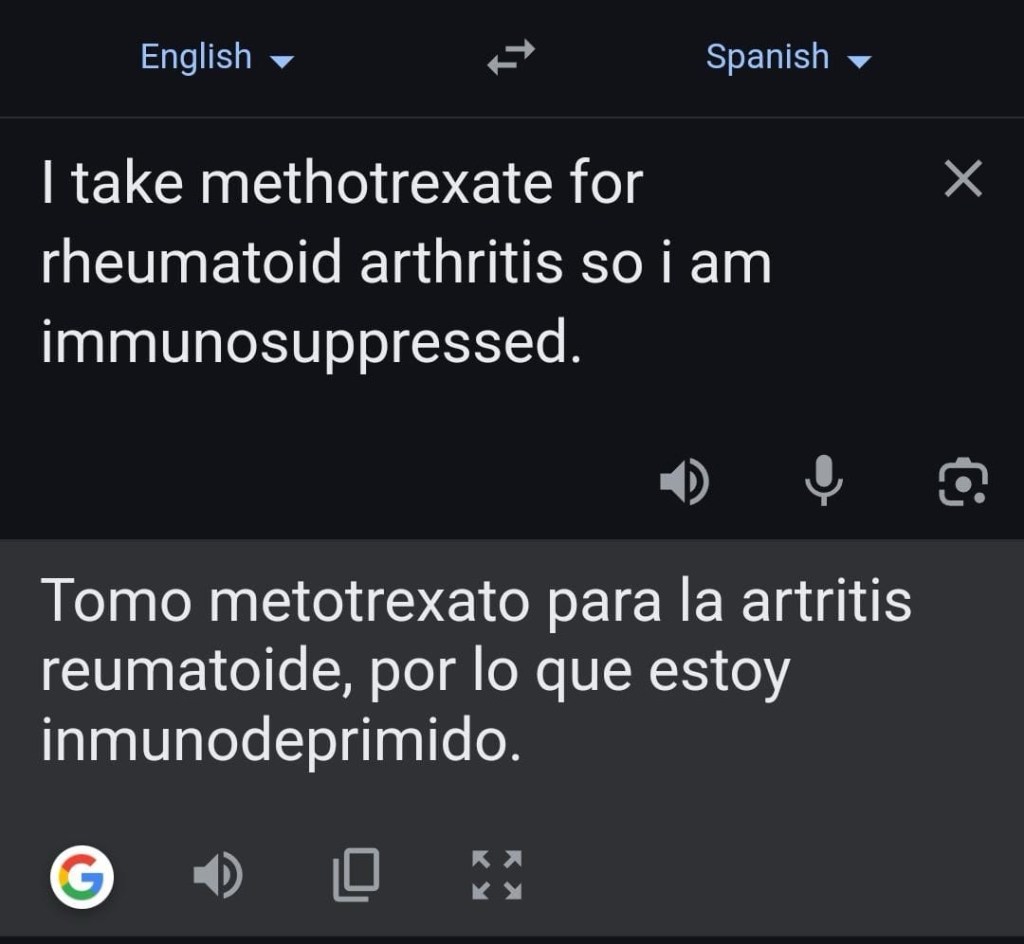
One of the many wonderful things about my wife is the way that she manages her health. She has a really nasty disease called rheumatoid arthritis – if you don’t know about this, it is unhelpfully labelled, being neither rheumatism nor arthritis – rather, it is an autoimmune disease that can seriously inflame and damage tissue and joints. She manages it brilliantly with some unpleasant drugs and a great deal of very cold water, and refuses to let it define her. But the side effect of the drugs means that she’s immuno-suppressed, meaning that her body is less able to fight infection. So this sign of infection was a bit of a red flag, and by about 8pm that night we were on our way to Vigo hospital for an evening with Spanish A&E.
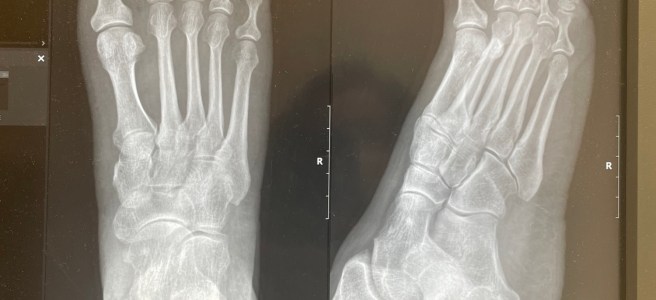
Emergency rooms are the same the world over. They’re full of people who (obviously) don’t want to be there, sometimes carrying injuries that must be incredibly painful, and everyone just desperate to be seen. Other than hanging around quite a bit, Mrs E was treated brilliantly – admitted really quickly, put into a wheelchair by the triage nurse, assessed by the doctor and put straight onto an IV drip with painkillers and antibiotics, bloods taken for tests, wounds dressed, X-rayed, and finally reassessed with the results, which showed the infection and a likely match with the antibiotics that would treat it. During all of this, we leaned heavily on Google Translate and WhatsApp support from Dr Jr Emu#1, who gave a varying quality of advice:

You might be eating your breakfast with this so I’ll not share the pictures of the wounds, but here’s a picture of the foot post-dressing.
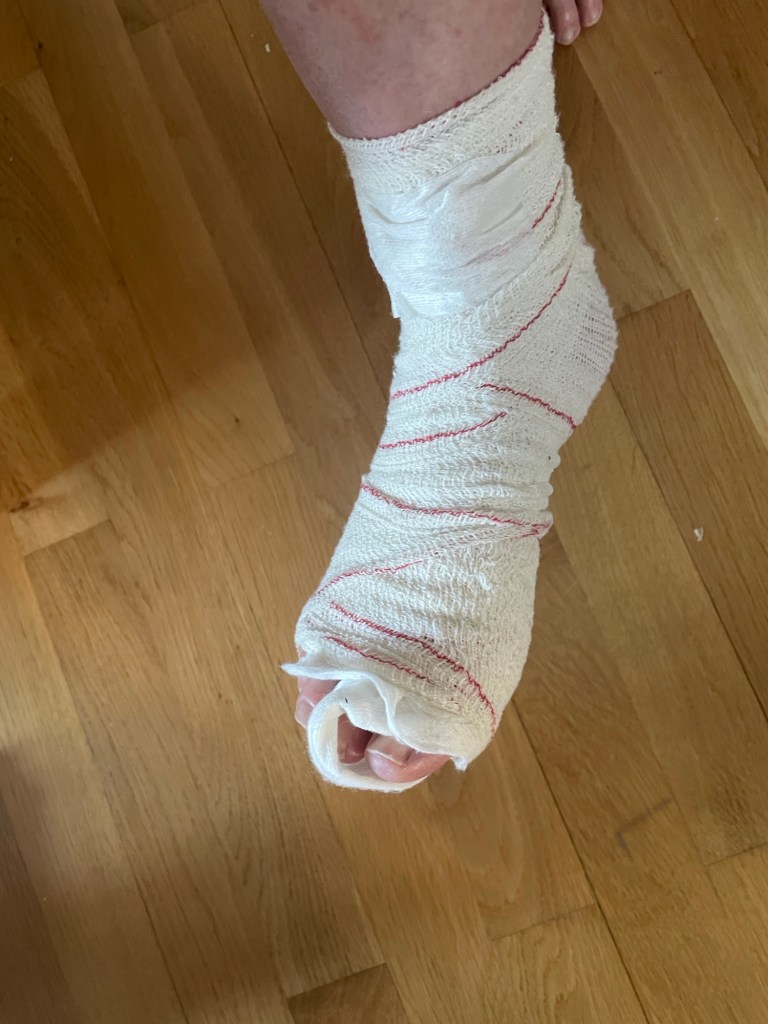
Eventually we got discharged, and headed back in the early hours with vague ideas about me continuing and Mrs E spending the next couple of days travelling by taxi and resting.
Woke up on day eight, and we both realised that those ideas were hopelessly optimistic, and the sensible thing to do would be to get home as soon as possible, so we spent most of the day cancelling hotels and flights, and booking stuff to get back the following day. And that’s where we are now, in Santiago de Compostela, sharing an airport bus with lots of happy pilgrims and their backpacks.
On day 4 we’d had an interesting conversation with our German friends, trying to understand why there’s no English equivalent word for schadenfreude, when the English probably needed the word far more than the Germans. I don’t know what the opposite word for being selfishly envious at other people’s happiness, but that’s what we felt now, when we heard the pilgrims chattering away. Well, a bit, anyway.
But we’d given it a go. If Mrs E could have put one more step in front of another with Beast 2 then she would have done. (My Garmin says we did 245,459 steps in the first seven days, so maybe that’s an achievement of sorts). And maybe we’ll come back next year to give it another try, if she can get hold of some waterproof socks.
We didn’t have a particular religious or spiritual experience, and we didn’t get to experience the end bit. But we saw some beautiful parts of Portugal and Spain, met some fabulous people, and really looked after each other when we needed to. Which, when I think about it, is vaguely spiritual in itself. So that’s probably enough to stop being fed up.
Until the next time, Buen Camino!

 The Emu