
Our regular reader will be aware that the Emu’s past travel plans have featured, and occasionally been beset by, the hidden agenda of one of the participants. Last year’s excursion to Berlin, for example, necessitated a fairly unremarkable pilgrimage to a place where David Bowie had once drunk a cup of coffee, or the trip to Budapest in 2014 where I forgot to mention (or Mrs E wasn’t listening) that the Budapest marathon happened to be taking place the very weekend we were visiting. Or a trip to Venice where we spent an inordinate amount of time in search of the perfect boot. That particular mission was successful, and the perfect boot was found; Italian made, finishing just shy of the knee, inside zip and a heel perfect for both walking and, in an emergency, a stirrup.
But apparently, like so many things in our lives, the concept of the perfect boot changes, and these days, by all accounts,* TPB is made in Portugal, has a block heel, chunky sole, Chelsea boot style elasticated gusset and can progress upwards into either a short elastic sock or a finishing strap as required. A lot less horsey inspired, a lot more violent goth. It’s what every 58 year old woman is wearing this season.
And with this not very well hidden agenda in mind, we set off to Lisbon last week, leaving behind the sub-arctic conditions of the UK, hoping to catch a bit of January sunshine, some Portuguese culture, some gentle R&R, and, of course, to tour the many shoe shops that Lisbon has to offer.
If you’ve not been to Lisbon, see if you can correct that some time soon. It’s really relaxed, has some stunning architecture, the people are lovely and the food and drink is wonderful, particularly if you’re keen on sardines. And port. It has a tram system that crosses the town’s many hills, and which hasn’t been modernised since the 1930’s, and an underground and train system that makes sense, runs on time and takes you places for next to nothing. You wander from huge pristine squares onto cobbled alleys and into beautiful parks, up to fabulous monuments and into little bars which are more inviting than almost any pub I’ve ever been to. And it is host to a dazzling array of shoe shops, many of which we were lucky enough to spend time in.
We’d decided to make some inroads into the childrens’ inheritance by staying in a fabulous hotel in the centre of Baixa, which was great, as everything we wanted was on our doorstep, including trains out to Belem, metros in all directions, and a tram stop right outside. Plus dozens of decent restaurants and bars within stumbling distance, easy access to runs along the riverfront, and hundreds (probably) of shoe shops. The hotel was great, and offered a walking tour every day, so we spent our first morning getting our bearings around Baixa, which is beyond elegant – really wide streets and 5-6 storey blocks that lead into the squares, most of which have statues of kings on horses wearing big hats. (The kings, not the horses). The reason for the building uniformity is all due to the triple disaster of 1755, a story of bad luck that would have had the early Lisbon monarchy saying ‘Doh’ increasingly loudly. Firstly, the earthquake, on 1 November (All Saints’ Day), that opened up 5 metre wide fissures in the city centre. Naturally, the good people of Lisbon who had survived rushed towards the docks, as it was the only area of clear open ground, and witnessed the sea-river receding into the distance. Then, 40 minutes later (you may be ahead of me here), there was a massive tsunami which covered most of the city centre. Because of the earthquake, the candles that had been lit for All Saints’ Day fell and set fire to the parts of the city that hadn’t already been destroyed. Most of the central city was destroyed and almost a quarter of the population died. The recovery from this devastation was astonishing – the decision was made to completely clear the Baixa area and build new ‘Pombaline’ blocks, separated by 12m-wide roads and paths, and featuring anti-seismic devices based on flexible wooden structures. These were tested, apparently, by filling the squares with soldiers and getting them to march up and down to see if the buildings moved (or, presumably, fell down on top of the soldiers). And they’re the reason why there are major restrictions on changing any interior walls for shops or apartments. All of which means that it’s a pretty cool place to be, as it looks pristine, like it hasn’t been changed for 250 years.

It’s important on holiday to plan for how you aim to spend the week ahead, and I decided on the flight over that I should develop a taste for port. So, with an excited spring in my step, I led Mrs E into the hotel bar, and ordered a cider for her and a port for me. Mrs E had settled into a comfortable seat and was leafing quietly through the menu before jumping up and swearing fairly loudly. She’d found the page with port on, and objected that I might be spending €20 of her shoe budget on one drink. So the holiday plans were adjusted back to a much more reasonable €4.50 for a large Super Bock beer, and that set the standard for the rest of the break.
I could give you a day by day account of what we got up to for the next week, but I fear that would be even more tedious to read than normal. But we had a fabulous time and did a load of things…
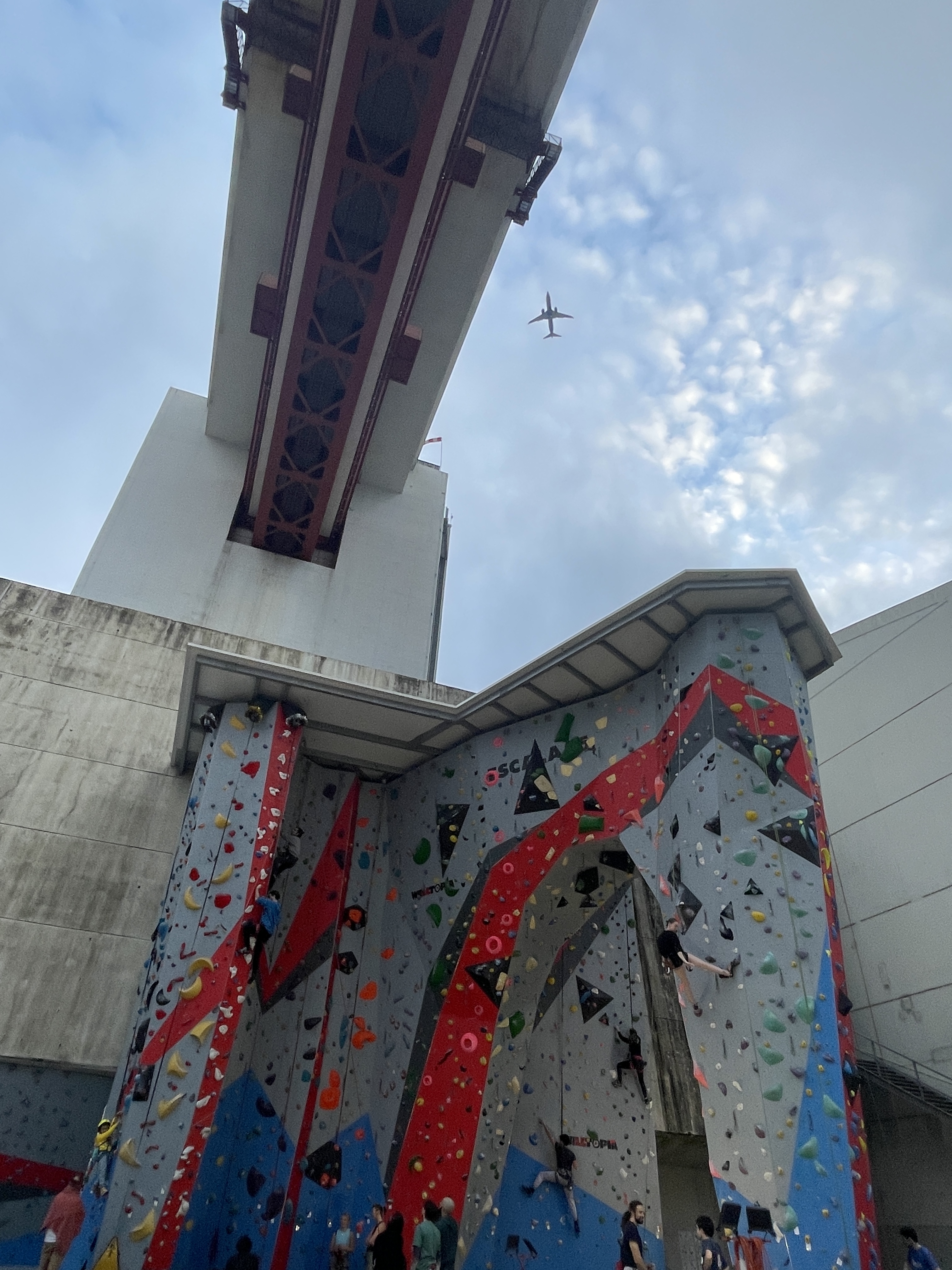
We mooched about Alfama which meant a lot of hill climbing in the rain, looking enviously at the warm dry tourists in the trams, but loving the cobbles on the hairpin pavements. We went to the Resistance museum, which told us that the 1974 revolution that had overthrown Salazar’s regime was just one in a long line of revolts dating back to the 14th century. We drank beer and cider in the fruit and vegetable market by the river. We headed for the National Swimming club, which boasted on Google of its outdoor pool which turned out to have shut down five years ago, so we swam in a huge indoor pool instead. We walked up to Estrela park and wandered around inside a huge deserted basilica. We queued up with all the other tourists to take the 28 tram from Martim Moniz to Campo Ourique, stopping occasionally to avoid hitting wayward pedestrians or delivery drivers, and rattling through tiny streets that were so close to the tram that the doors and windows of the houses would have to be opened really carefully. We walked to the foot of the suspension bridge, 1 km long, that connects Lisbon to Almada, and snuck into the climbing wall site, where we drank coffee and looked up at the climbers, grabbing the odd picture that showed climbers, bridge and a plane passing overhead in one busy shot:
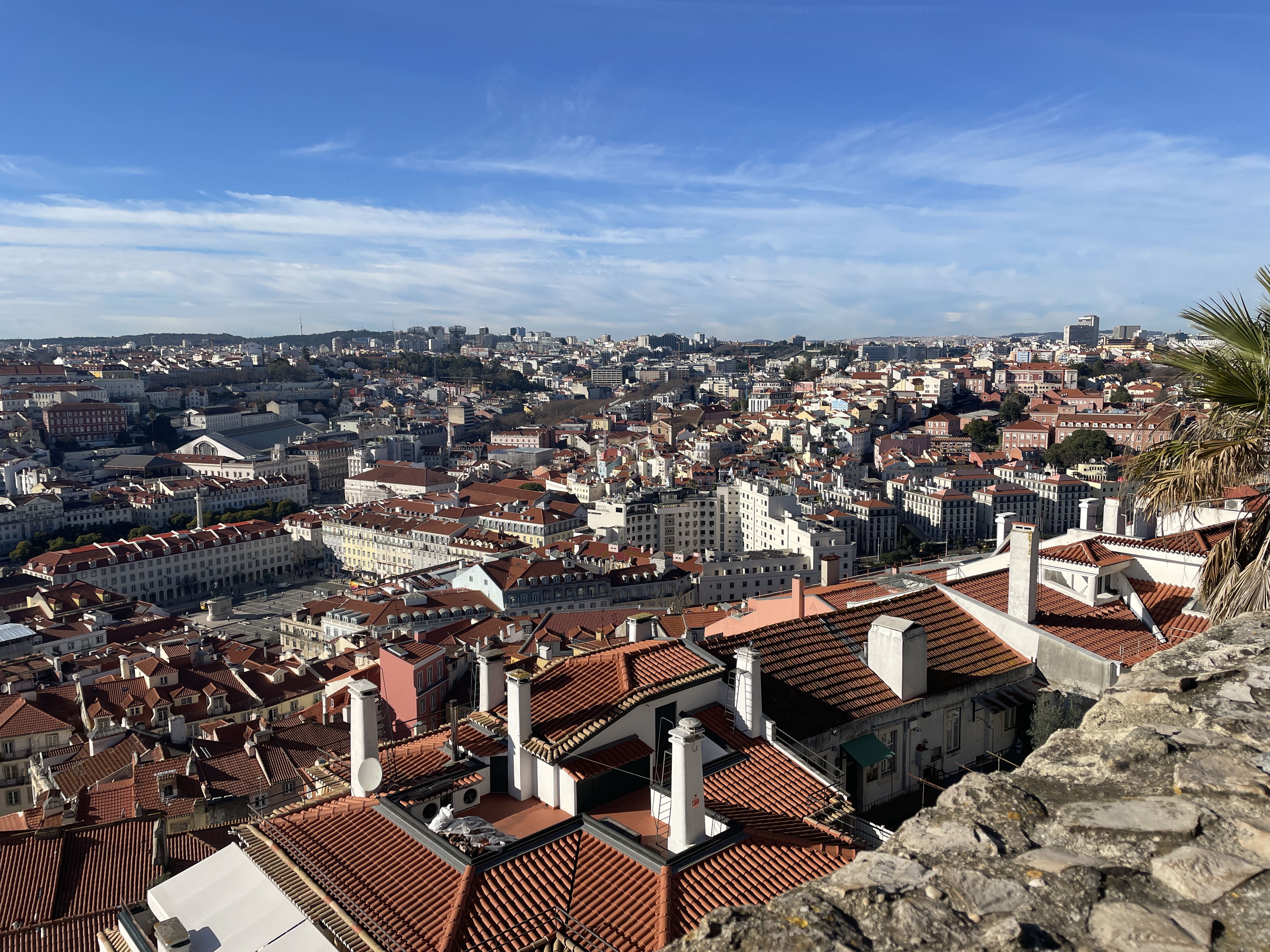
We went to the museum of Lisbon in the Pimenta palace, and learnt more about the early revolutions, and we headed up to the castle to see the fabulous views and stand where some of the pre-Salazar revolts had taken place:
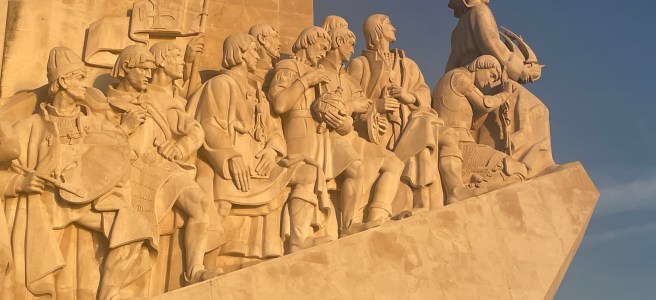
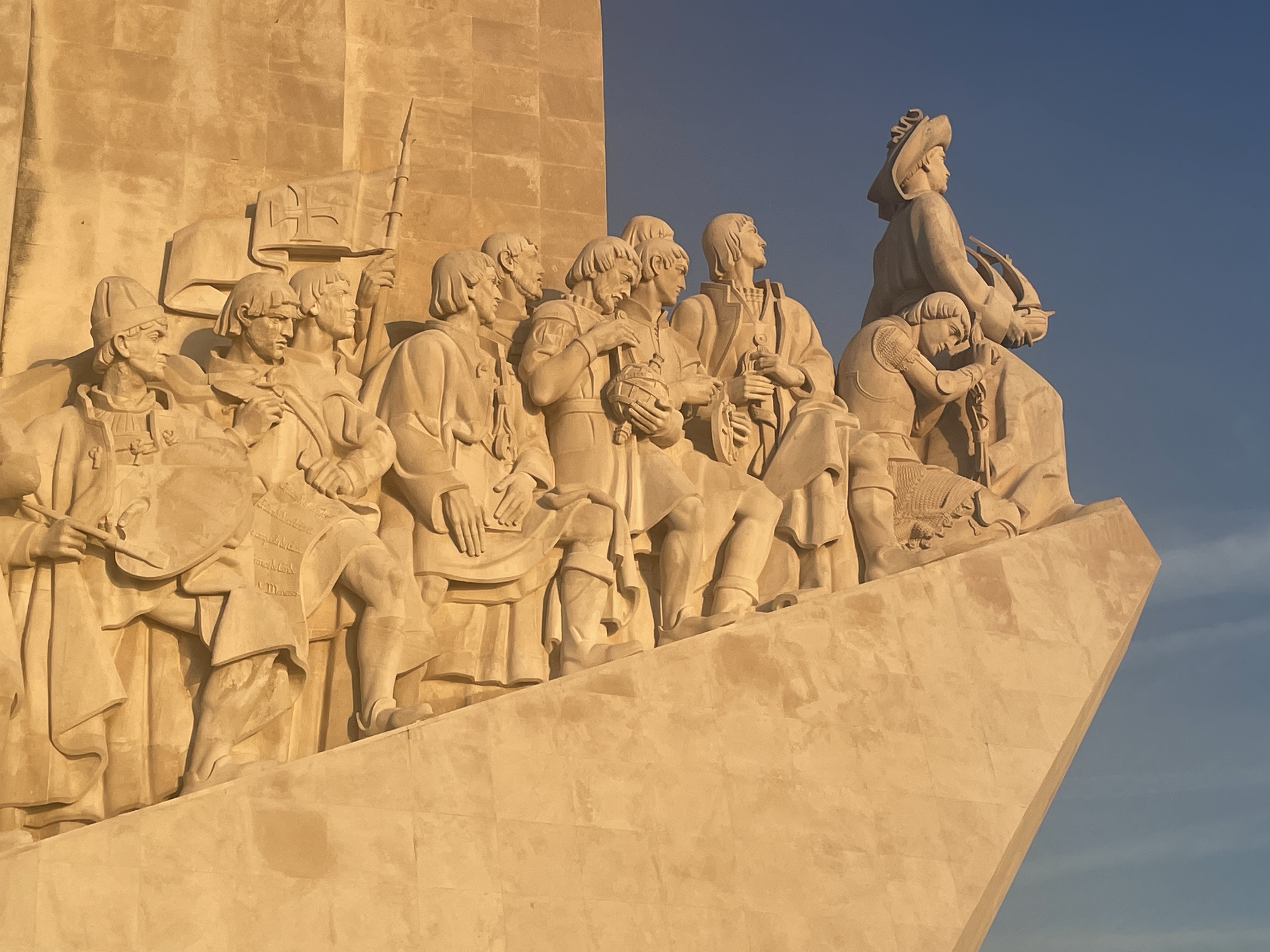
We took the train out to Belem to see the Discovery monument and Belem tower, where the King would stand watching for returning boats.

We took the Elevador Santa Justa to the Bairro Alto, then wandered down the cobbles again. And we took the train out to Sintra, first to the Palicio de Pena, striking a bold red and yellow pose on top of a stupidly steep hill, and then to the mansion at Montserrate, which was restored by Francis Cook in the late nineteenth century as a homage to romanticism, so you can’t move for stunning windows, tiles everywhere, internal galleries and Greek statues.
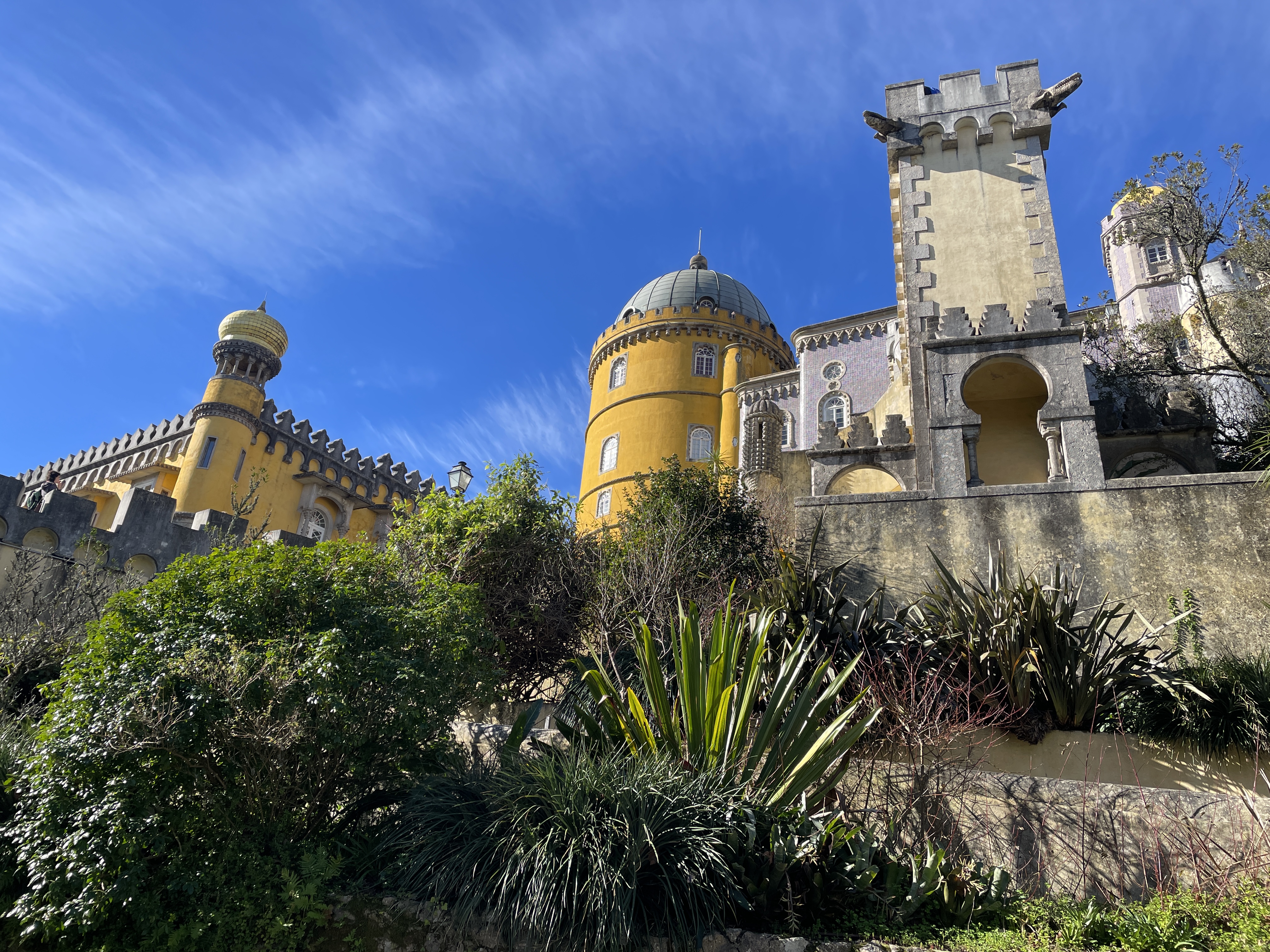

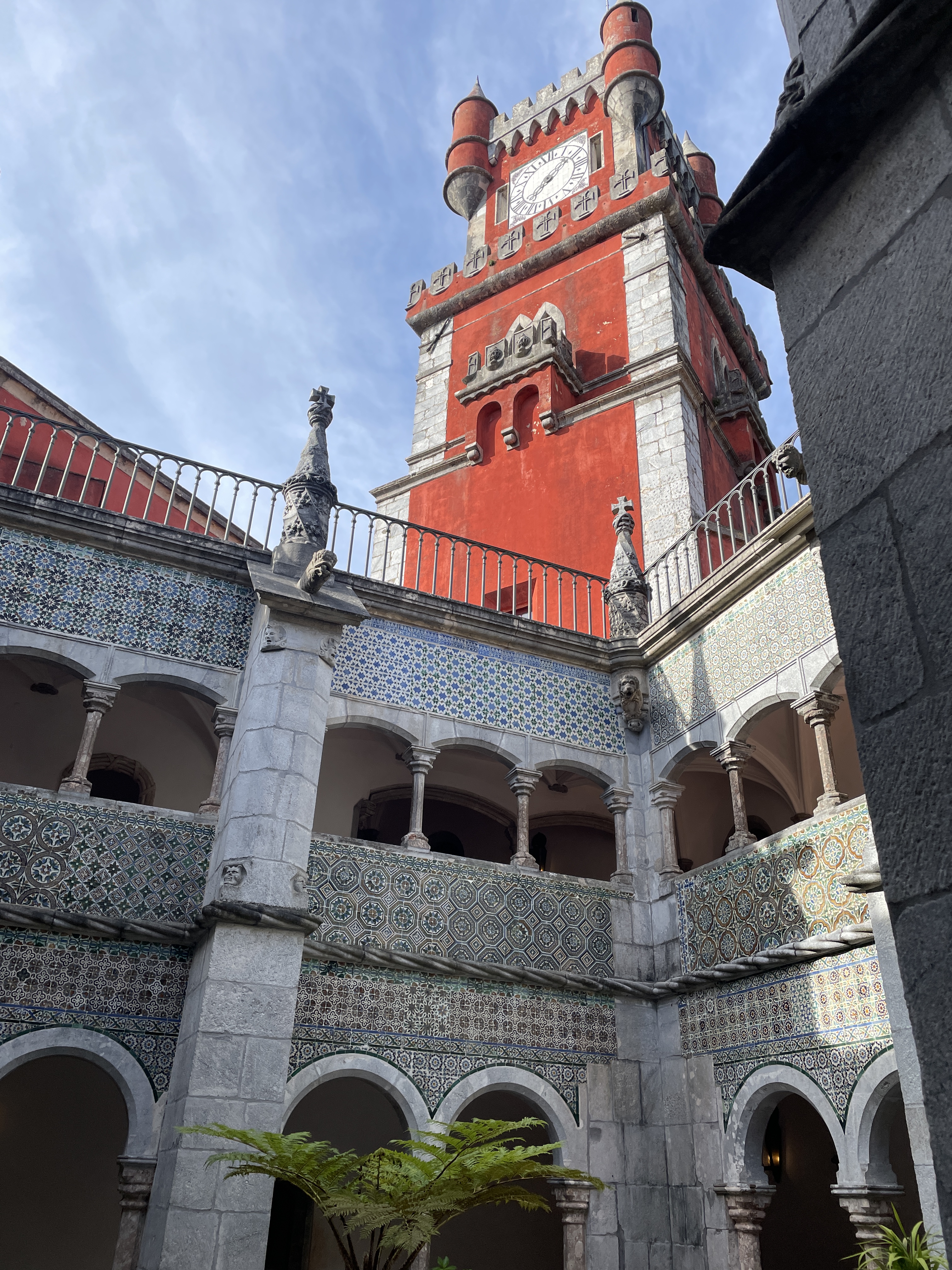

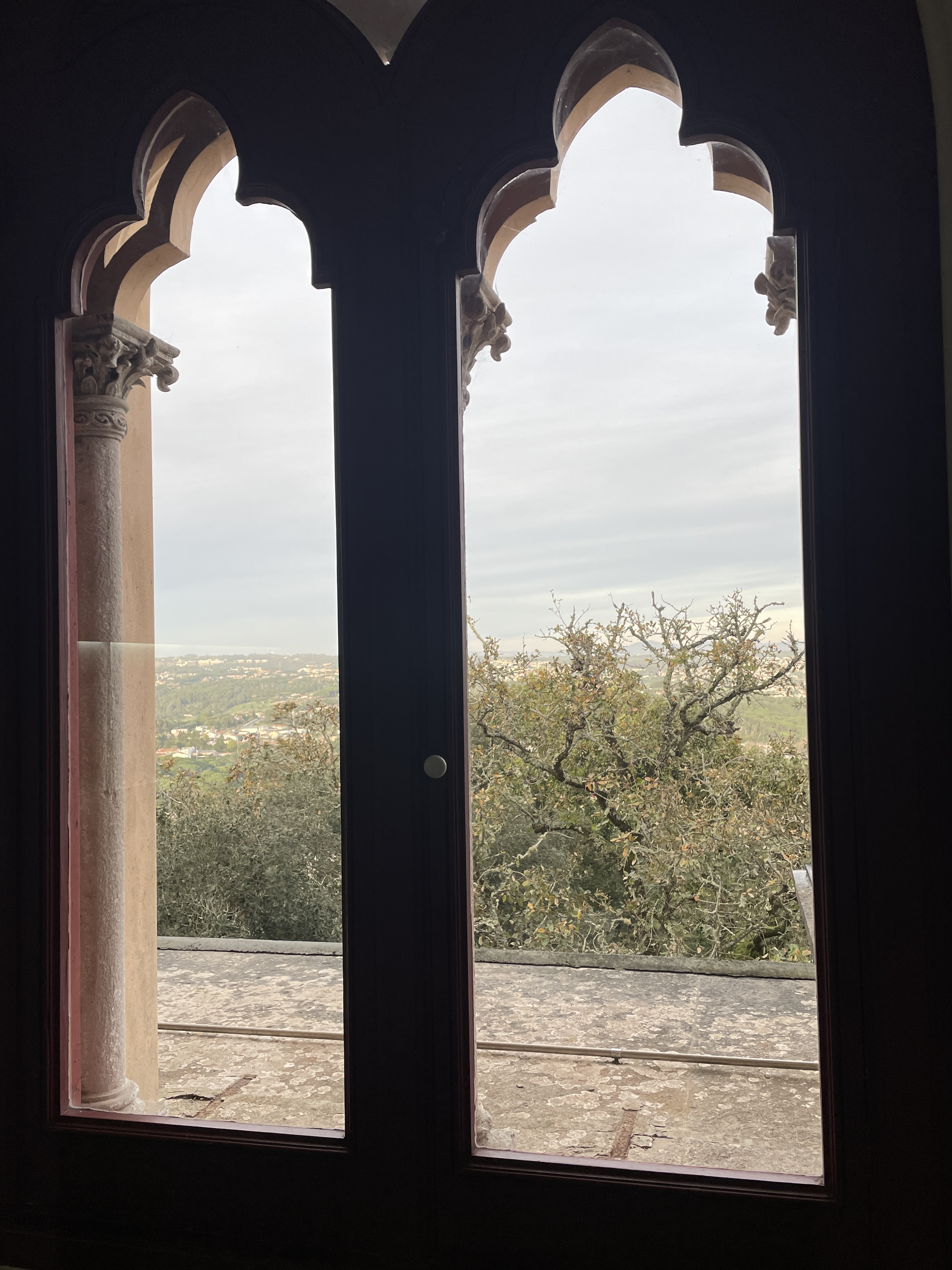
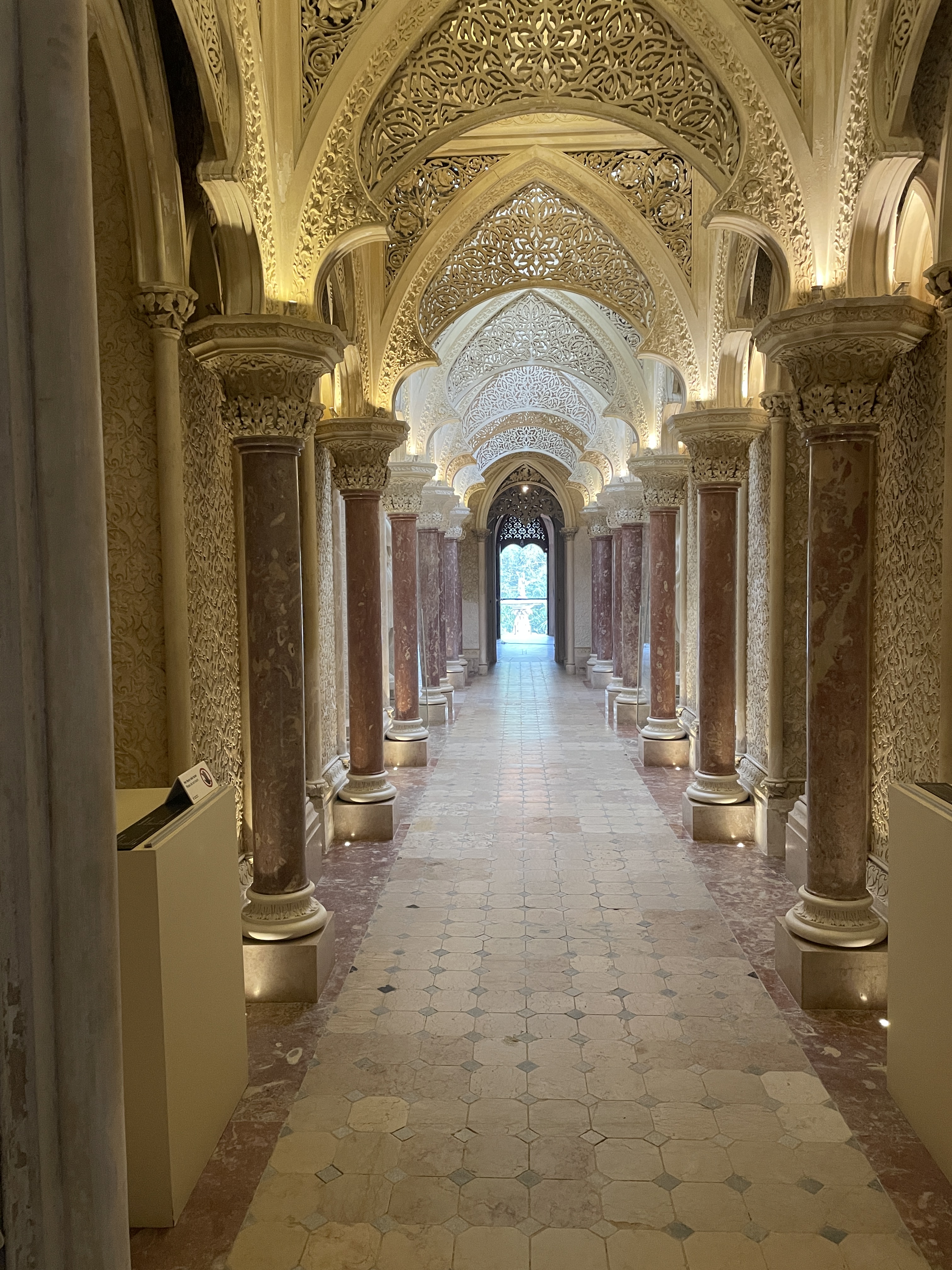
And we took another train out, this time to Entroncamento, to visit our friend A, who had come out here eight years ago, ostensibly for 3 months, but had just forgotten to go home. A seems to have landed an idyllic lifestyle amongst the orange and lemon trees, surrounded by dogs and horses, in a beautiful house that she’s converted from a very basic shell. We went for a beer on the way home to her local bar, where we were quizzed by other people on when we were planning to move out here, and we were tempted to say ‘quite soon’.
And in amongst all of these adventures, the spectacle of returning home without TPB loomed large. There are many branches of Seaside shoeshop in Lisbon, and we visited each one, hoping that TPB would appear by magic, in the same way that I used to go into record shops and hope that by going to enough of them, eventually I’d find that The Bible had released a third album. We got stunningly close near to Rossio Square, where Mrs E tried on an almost PB, but was put off by a man gently hovering nearby, who wanted exactly that boot in that size for his daughter. So Mrs E gallantly gave them up, declaring that they weren’t quite the fully PB.
And so Mrs E returned empty handed, or possibly empty footed. She didn’t seem too disappointed, already making plans to return in a few months to visit A to ride horses and walk dogs. Although I’m sure she’ll take in a few shoe shops on the way.
*note, when I say ‘all accounts’… that’s not necessarily what I mean

 The Emu